15 July 2026
What is a Student Information System (SIS)? Complete Guide for Schools & Colleges (2026)
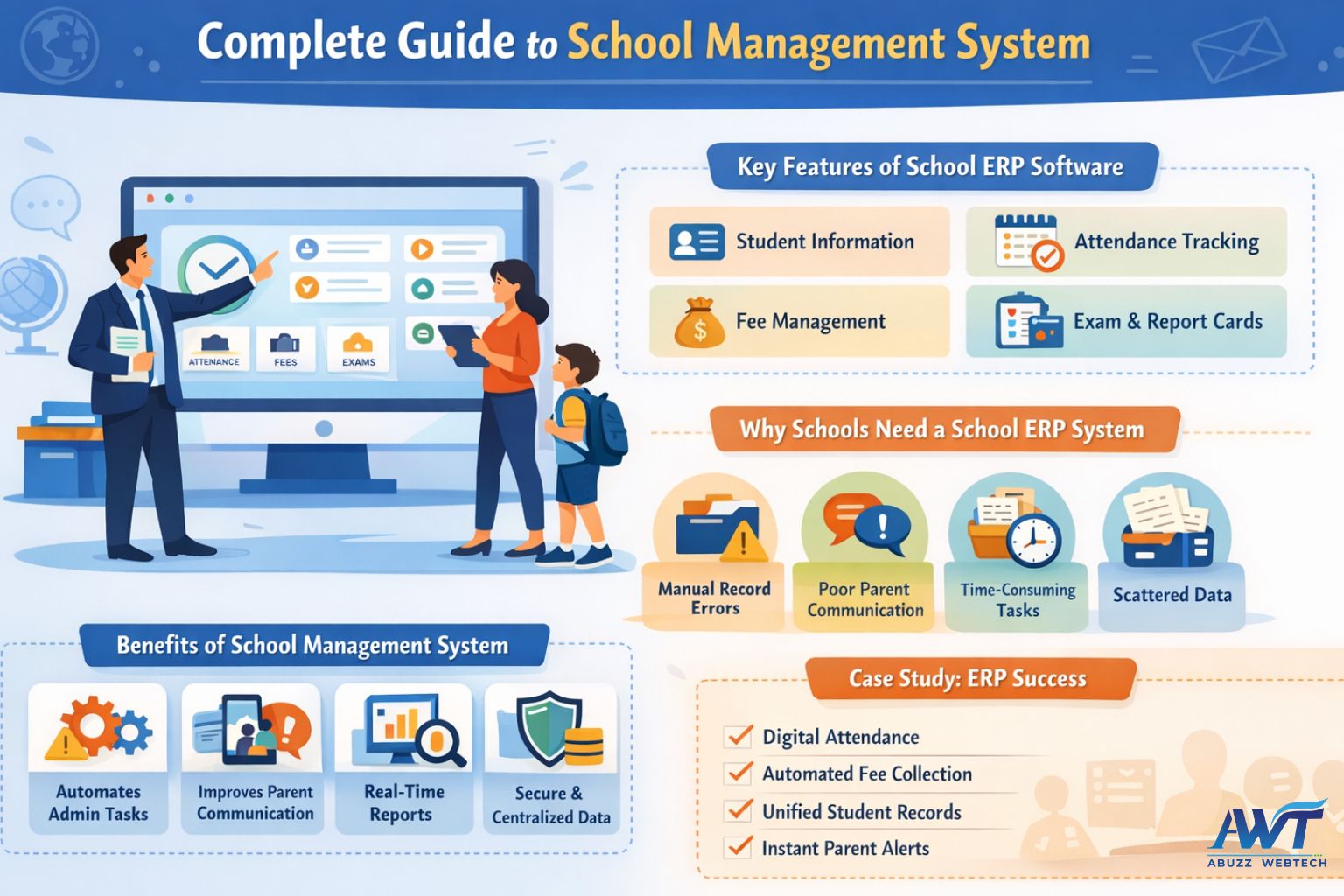
Managing student information is one of the most important responsibilities of any educational institution. Every day, Schools, colleges, universities handle admissions, attendance, examinations, fee collection, report cards, certificates, and communication with students and parents.
When these activities are managed through paper records, spreadsheets, or different software applications, they can become time-consuming and difficult to maintain. It also increases the chances of duplicate records, manual errors, and delays in accessing important information.
This is where a Student Information System (SIS) becomes an essential solution.
A Student Information System helps educational institutions manage the complete student lifecycle from admission and enrollment to academics, examinations, fee management, and graduation through one centralized platform.
Whether you're a school administrator, principal, teacher, or management professional, understanding how an SIS works can help you improve operational efficiency, reduce administrative workload, and deliver better services to students and parents.
What is a Student Information System (SIS)?
A Student Information System (SIS) is a centralized software application designed to collect, organize, manage, and maintain student information throughout the academic journey.
It stores important information such as admission details, attendance records, examination results, academic performance, fee payments, documents, and communication history in one secure location.
Instead of maintaining separate records across multiple departments, an SIS provides a single source of accurate and up-to-date information that can be accessed by authorized users.
Today, Student Information System software is widely used by schools, colleges, universities, coaching institutes, and educational organizations to improve administrative efficiency and enhance the overall student experience.
Why Do Educational Institutions Need a Student Information System?
As educational institutions grow, managing student information manually becomes more complex. Admissions increase, academic records expand, fee transactions multiply, and communication with parents becomes more demanding.
A Student Information System (SIS) simplifies these responsibilities by bringing all student-related information into one centralized platform. This not only saves time but also improves data accuracy and supports better decision-making.
Educational institutions commonly implement SIS software to:
- Simplify student admissions and enrollment
- Maintain accurate student records
- Record attendance digitally
- Manage examinations and academic performance
- Track fee payments and financial records
- Improve communication with students and parents
- Generate reports quickly
- Reduce paperwork and manual errors
- Strengthen data security
- Improve overall administrative efficiency
Common Challenges Without a Student Information System
Many institutions continue to rely on manual processes or multiple disconnected software applications. While this may work initially, it often creates operational challenges as the institution grows.
| Challenge | Impact |
|---|---|
| Paper-based student records | Increased paperwork and storage requirements |
| Excel-based data management | Higher risk of duplicate or inaccurate records |
| Manual attendance tracking | Time-consuming and difficult to monitor |
| Delayed report generation | Slower academic and administrative decisions |
| Scattered student information | Difficult to access complete records quickly |
| Limited communication | Delays in sharing updates with students and parents |
How a Student Information System Solves These Challenges
A Student Information System replaces manual processes with a centralized digital platform that connects different academic and administrative functions.
| Challenge | SIS Solution |
|---|---|
| Manual paperwork | Digital student records |
| Duplicate information | Centralized student database |
| Attendance management | Automated attendance tracking |
| Examination records | Digital marks and result management |
| Parent communication | Instant notifications and parent portal |
| Report preparation | Automated reports and analytics |
Real-Life Example
Imagine a school with 2,000 students.
Every day, teachers record attendance, administrators process admissions, the accounts team manages fee payments, and examination staff prepare report cards.
If these tasks are handled using spreadsheets or paper records, finding information can take time, reports may be delayed, and manual errors become more likely.
With a Student Information System (SIS), all departments work on the same platform. Student information is updated in real time, attendance and academic performance are easy to monitor, reports are generated instantly, and communication with parents becomes faster and more transparent.
How Does a Student Information System (SIS) Work?
A Student Information System (SIS) works as a centralized platform where all student-related information is stored, updated, and managed throughout the academic year.
When a new student takes admission, the institution creates a digital profile in the SIS. From that point onward, every important activity such as attendance, academic performance, examinations, fee payments, and communication is recorded in the same system.
This allows administrators, teachers, students, and parents to access accurate information based on their user roles, making day-to-day academic management faster and more efficient.
Student Information System Workflow
| Step | Activity |
|---|---|
| 1 | Student admission and registration |
| 2 | Student profile is created |
| 3 | Attendance is recorded regularly |
| 4 | Teachers update assignments, marks, and grades |
| 5 | Fee payments and financial records are maintained |
| 6 | Students and parents access information through secure portals |
| 7 | Reports, report cards, certificates, and analytics are generated |
Student Information Flow
- Admission
- Student Profile
- Attendance
- Academics
- Examinations
- Fee Management
- Parent & Student Portal
- Reports & Analytics
Key Features of a Student Information System
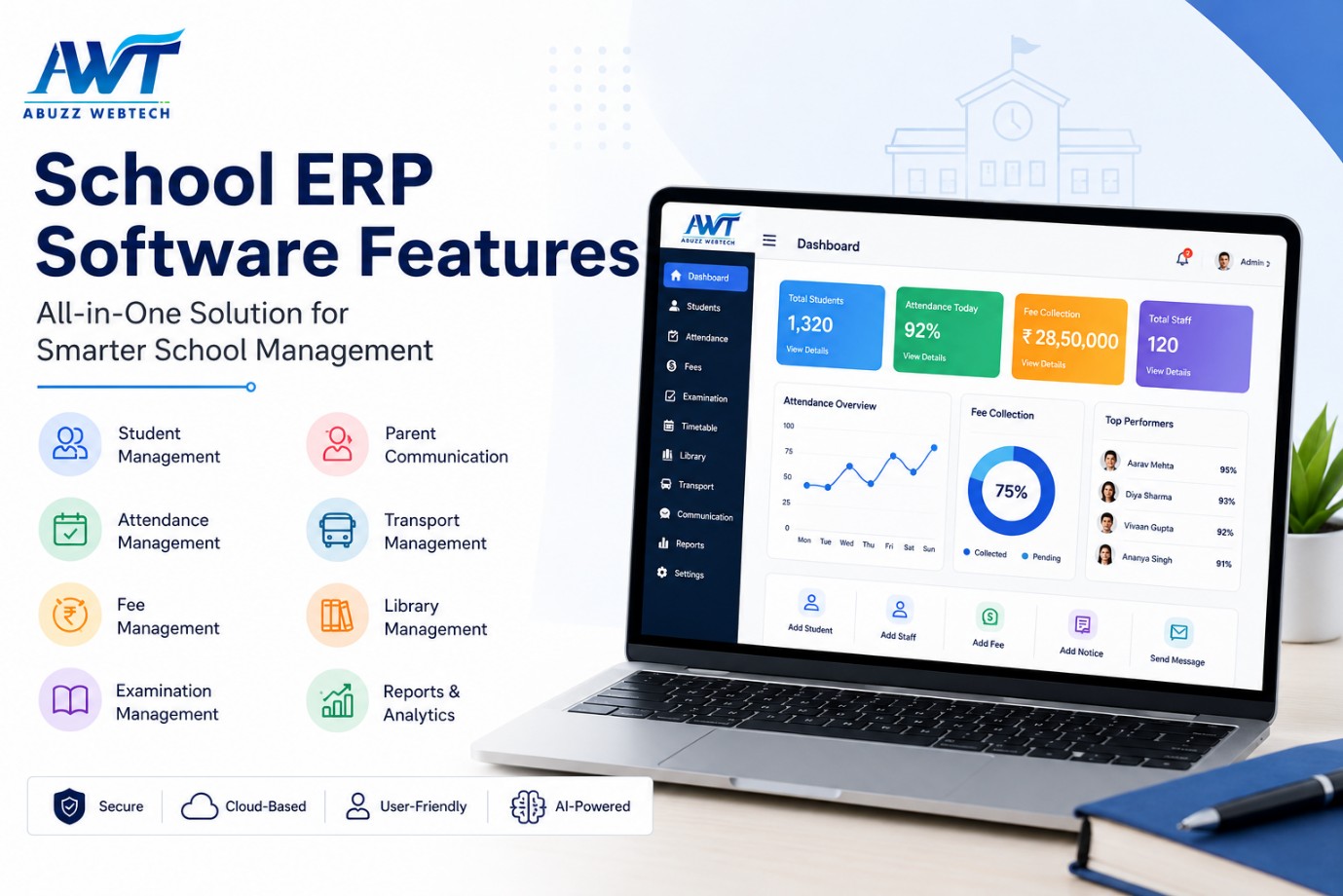
A modern Student Information System offers tools that simplify both academic and administrative activities. Instead of using separate software for different tasks, institutions can manage everything from one platform.
| Feature | Description |
|---|---|
| Admission Management | Simplifies student admissions and enrollment. |
| Student Profile | Stores personal, academic, and contact information. |
| Attendance Management | Records daily attendance digitally. |
| Examination Management | Manages marks, grades, and report cards. |
| Fee Management | Tracks fee payments, receipts, and dues. |
| Timetable Management | Creates and shares class schedules. |
| Parent Portal | Keeps parents informed about student progress. |
| Student Portal | Gives students access to attendance, assignments, and results. |
| Document Management | Stores important student documents securely. |
| Notifications & Alerts | Sends important announcements instantly. |
| Reports & Analytics | Generates academic and administrative reports. |
Essential Modules of a Student Information System
Every institution has different requirements, but these modules form the foundation of a complete Student Information System.
| Module | Purpose |
|---|---|
| Admission Management | Student registration and enrollment |
| Student Records | Maintain complete student information |
| Attendance Management | Daily attendance tracking |
| Examination Management | Marks, grades, and report cards |
| Fee Management | Student fee collection and payment history |
| Timetable Management | Schedule classes and examinations |
| Parent Portal | Parent communication and updates |
| Student Portal | Student self-service access |
| Reports & Analytics | Academic and management reports |
Benefits of a Student Information System
A Student Information System benefits everyone involved in the educational process.
Benefits for Educational Institutions
- Centralized student records
- Faster administrative processes
- Improved operational efficiency
- Better decision-making with real-time reports
- Reduced paperwork
- Secure data management
Benefits for Teachers
- Easy attendance management
- Quick access to student information
- Faster result preparation
- Better performance tracking
- Less administrative workload
Benefits for Students
- Easy access to attendance and academic records
- View examination results online
- Download report cards and important documents
- Receive announcements and notifications instantly
Benefits for Parents
- Monitor attendance and academic progress
- Receive school announcements and fee reminders
- Stay connected with teachers and the institution
- Access student information through a secure parent portal
Who Uses a Student Information System?
Although a Student Information System (SIS) focuses on student data, it supports multiple users across the institution.
| User | Common Activities |
|---|---|
| School Administrators | Admissions, student records, reports |
| Teachers | Attendance, assessments, marks, communication |
| Students | View timetable, assignments, attendance, results |
| Parents | Track student progress and receive updates |
| Finance Team | Fee collection and financial reporting |
| Management | Monitor institutional performance through reports |
Student Information System (SIS) vs Education ERP
Many people use the terms Student Information System and Education ERP interchangeably. However, they are not the same.
A Student Information System primarily focuses on managing student data, while an Education ERP manages the complete operations of an educational institution.
| Student Information System (SIS) | Education ERP |
|---|---|
| Focuses on student information | Manages the entire institution |
| Student records and academics | Admissions, Academics, HR, Finance, Library, Transport, Inventory, Hostel, LMS and more |
| Used mainly by academic departments | Used by every department |
| Best for student lifecycle management | Best for end-to-end institutional management |
Which One Should You Choose?
Choose a Student Information System (SIS) if your primary goal is to digitize student records, attendance, examinations, and academic management.
If you're looking for a complete solution that also manages HR, finance, payroll, library, transport, admissions, and other institutional operations, an Education ERP is the better choice.
Signs Your Institution Needs a Student Information System
If your institution faces any of these challenges, it may be the right time to implement an SIS:
- Student records are managed using Excel or paper files.
- Attendance tracking takes too much time.
- Report card preparation is delayed.
- Parent communication is inconsistent.
- Different departments use different software.
- Reports take hours instead of minutes.
- Finding student information is difficult.
- Administrative workload continues to increase every year.
How to Choose the Right Student Information System (SIS)
Choosing the right Student Information System (SIS) is an important decision for any educational institution. The ideal solution should not only meet your current needs but also support future growth and changing academic requirements.
Before selecting an SIS, evaluate your institution's size, workflows, number of users, and long-term goals. A well-designed system should simplify administration, improve collaboration, and provide a seamless experience for staff, students, and parents.
Checklist Before Choosing an SIS
| What to Consider | Why It Matters |
|---|---|
| Ease of Use | Reduces the learning curve for teachers and staff. |
| Cloud-Based Access | Enables secure access from anywhere. |
| Data Security | Protects confidential student records and institutional data. |
| Scalability | Supports future growth without changing software. |
| Mobile Accessibility | Allows students, parents, and teachers to stay connected. |
| Customization | Adapts to your institution's unique workflow. |
| Integration | Works with ERP, LMS, HRMS, payment gateways, and other systems. |
| Reports & Analytics | Provides valuable insights for academic and administrative decisions. |
| Technical Support | Ensures smooth implementation and ongoing assistance. |
Common Mistakes to Avoid
Many institutions select software based only on price. Instead, focus on long-term value, usability, and support.
Avoid these common mistakes:
- Choosing software without understanding your institution's requirements.
- Ignoring data security and backup features.
- Selecting a system that cannot scale as student numbers increase.
- Overlooking mobile access for students and parents.
- Not checking the quality of customer support and training.
- Purchasing software without a live demo.
- Ignoring integration with existing educational systems.
Taking the time to evaluate these factors can help you choose a solution that delivers long-term benefits.
Why Choose ABuzz WebTech for Your Student Information System?
Managing student information requires a solution that is reliable, secure, and easy to use. At ABuzz WebTech, we develop education technology solutions that help institutions simplify administration and improve academic operations.
With over 20 years of experience in the education sector, we understand the day-to-day challenges faced by schools, colleges, universities, and training institutes. Our Student Information System is designed to streamline student management while supporting the institution's long-term digital growth.
Why Institutions Choose ABuzz WebTech
- Over 20 years of experience in Education ERP solutions
- User-friendly interface with minimal learning curve
- Secure cloud-based platform with role-based access
- Student, Parent, and Teacher self-service portals
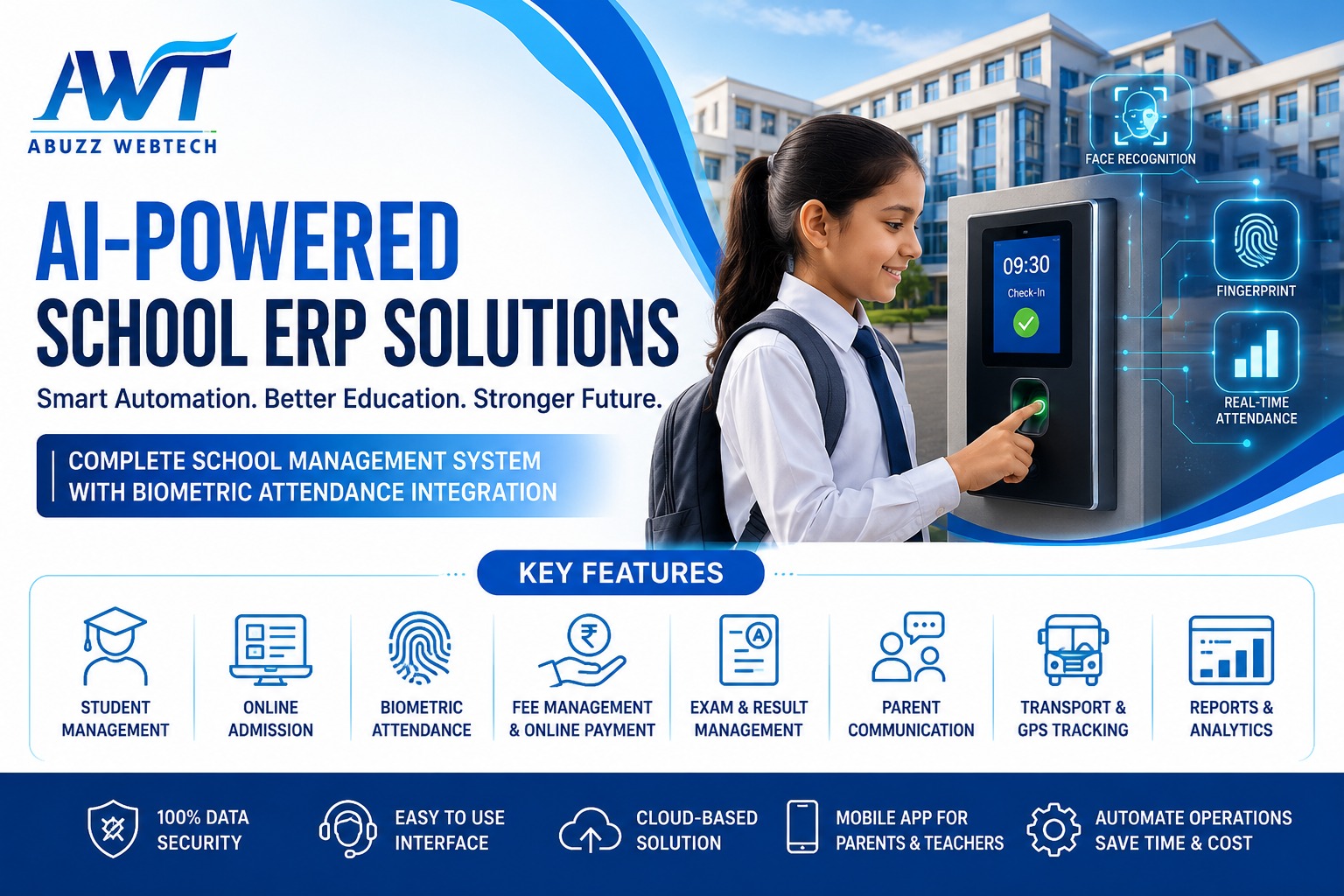
- Admission, Attendance, Examination, and Fee Management in one system
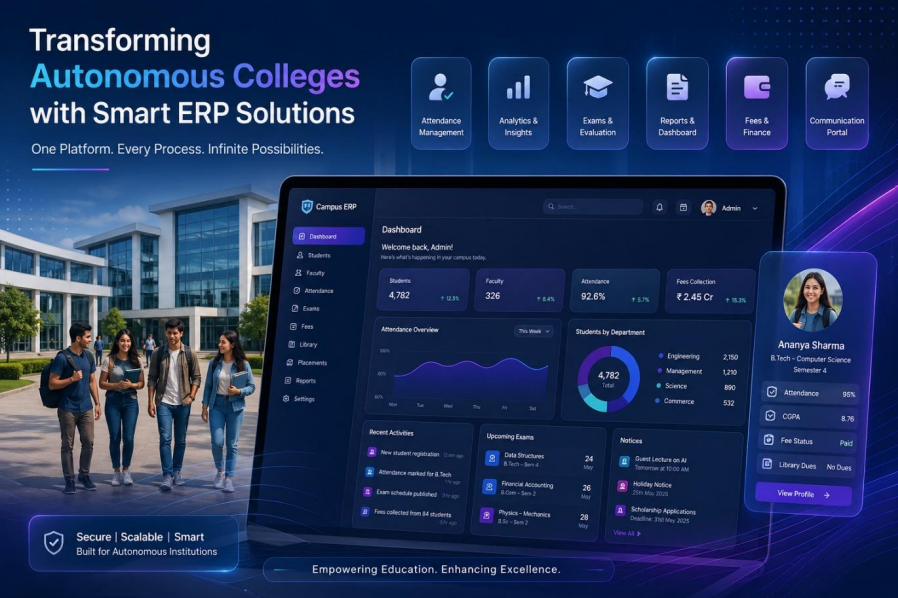
- Real-time reports and management dashboards
- Mobile-friendly access for anytime, anywhere connectivity
- Easy integration with Education ERP, LMS, HRMS, and payment gateways
- Customizable modules based on institutional requirements
- Dedicated implementation, training, and technical support
Whether you're moving from manual processes or upgrading your existing system, ABuzz WebTech provides a scalable solution tailored to the needs of educational institutions.
Ready to Modernize Student Management?
Managing student records doesn't have to be complicated.
A modern Student Information System helps institutions save time, improve accuracy, reduce paperwork, and enhance collaboration across departments.
If you're planning to digitize student management, now is the right time to explore a solution that supports both your current needs and future growth.
Frequently Asked Questions (FAQs)
1. Can a Student Information System be integrated with existing school software?
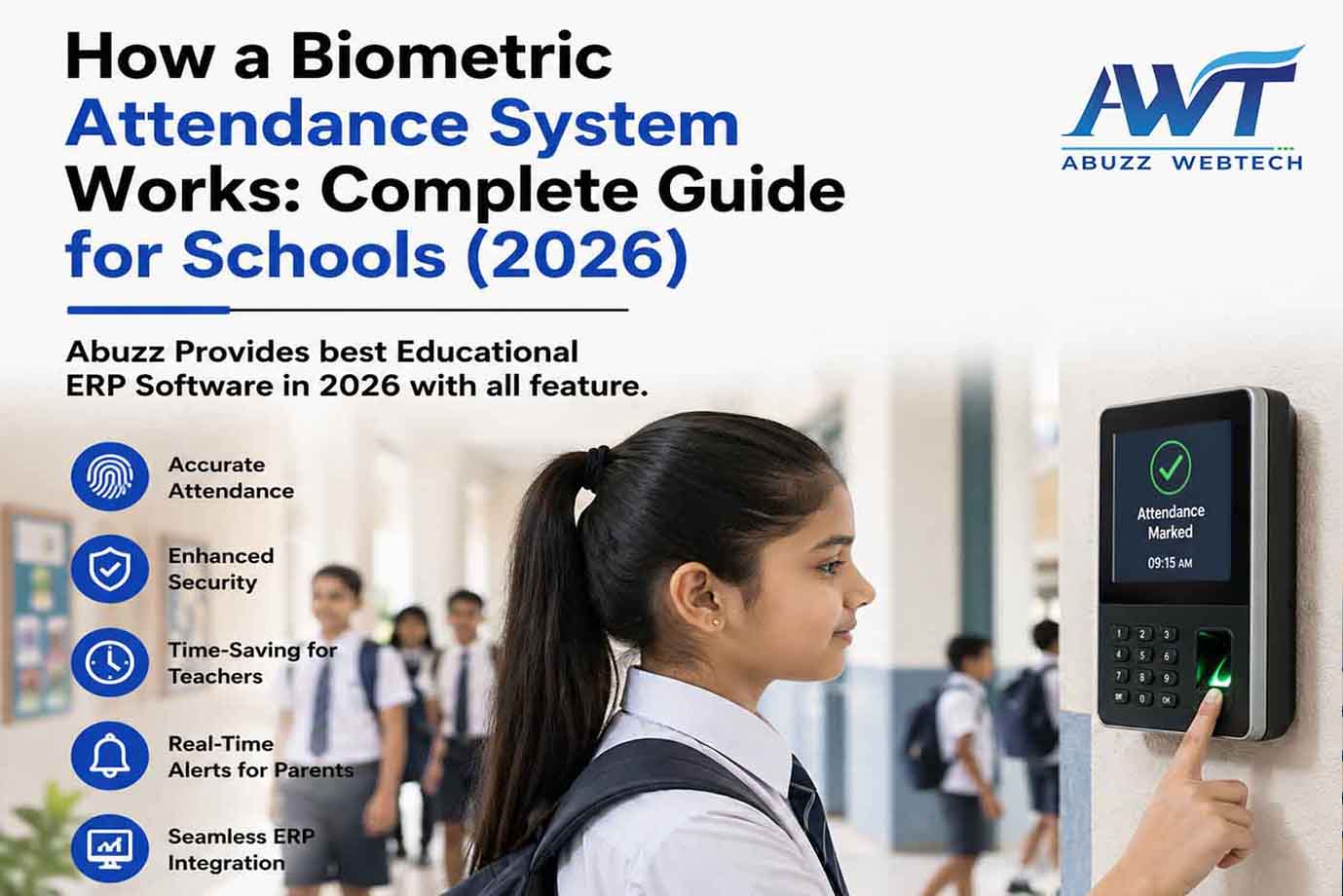
Yes. Most modern Student Information Systems support integration with Education ERP, Learning Management Systems (LMS), payment gateways, accounting software, biometric attendance systems, and other educational applications.
2. Is a Student Information System suitable for small schools?
Yes. Student Information Systems are available for institutions of all sizes. Small schools can start with essential modules and expand the system as their requirements grow.
3. How long does it take to implement a Student Information System?
Implementation depends on factors such as the size of the institution, data migration requirements, and customization needs. With proper planning and training, most implementations can be completed smoothly.
4. How secure is student data in an SIS?
A reliable Student Information System includes features such as user authentication, role-based permissions, encrypted data storage, regular backups, and secure cloud infrastructure to help protect sensitive student information.
5. Can a Student Information System support online and offline learning?
Yes. Many modern Student Information Systems integrate with Learning Management Systems (LMS) and other digital learning tools, enabling institutions to manage both classroom-based and online learning activities from a connected platform.