2 March 2026
Complete Guide to School Management System
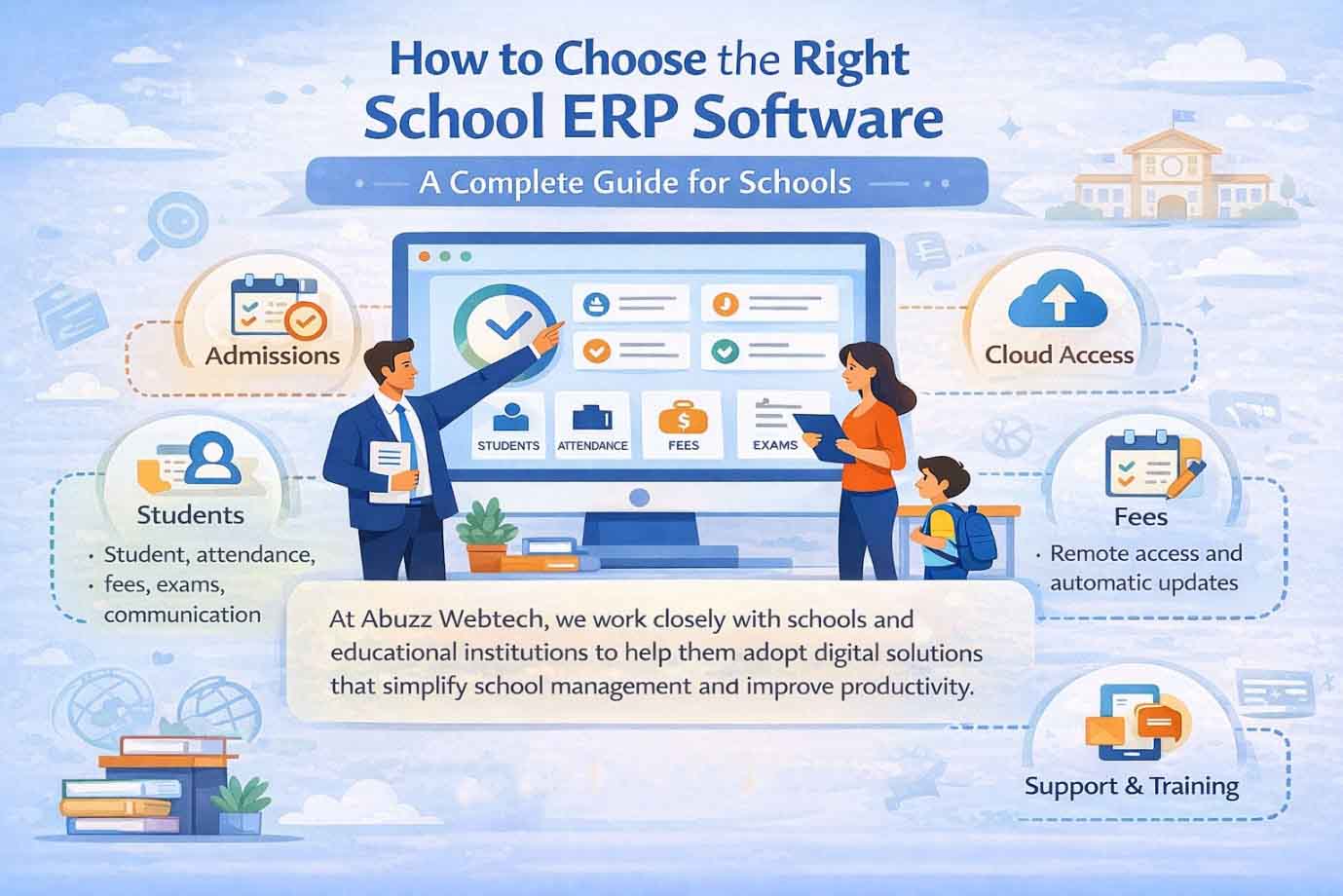
Managing a school involves hundreds of daily administrative and academic tasks. From handling student admissions and attendance to managing fees, exams, and communication with parents, the workload can quickly become overwhelming when done manually.
A School ERP Software(also known as School ERP Software) helps schools simplify these tasks by bringing all operations into one digital platform.
With the help of modern school management software, schools can automate routine work, improve communication, and make better data-driven decisions.
What is a School Management System?
A School Management System is a digital software platform designed to manage and automate the daily operations of schools, colleges, and educational institutions.
This system acts as a centralized platform where administrators, teachers, students, and parents can access important information and perform different tasks efficiently.
Instead of maintaining multiple registers, spreadsheets, and manual reports, schools can manage everything through a single online dashboard.
Key Functions of School Management Software
Modern School ERP System helps schools save time, reduce errors, and improve overall administrative efficiency.
| Module | Function |
|---|---|
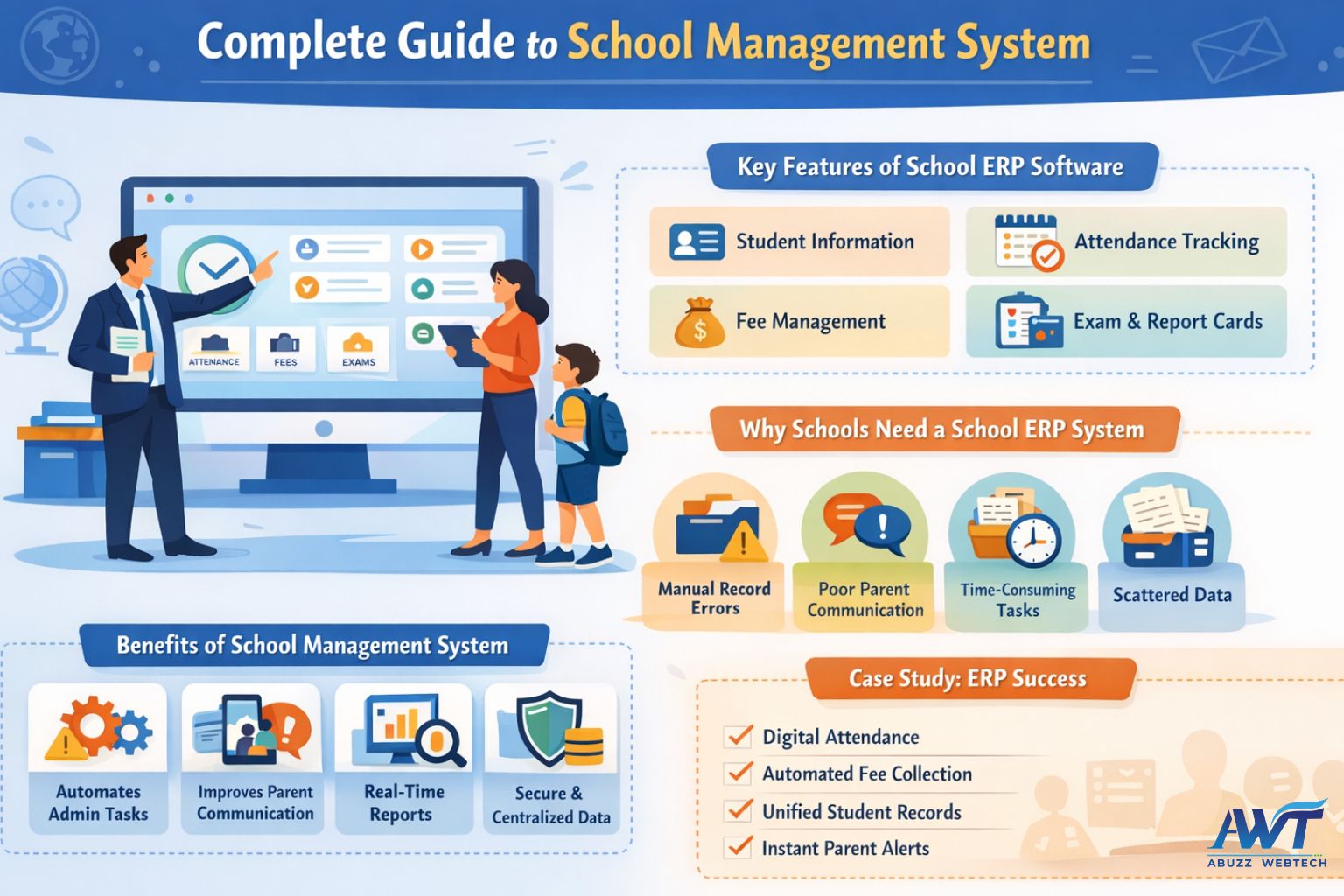
| Student Information Management | Stores student profiles, admission records, and academic history |
| Attendance Management | Tracks daily attendance of students and staff |
| Fee Management | Automates fee collection, receipts, and payment reminders |
| Examination Management | Conduct exams, manage marks, and generate report cards |
| Communication System | Connects teachers, parents, and students through notifications |
Key Features of a School Management System
Traditional school administration often relies on manual paperwork, which can be time-consuming and prone to errors.
As schools grow in size, managing records and communication becomes even more challenging. A School ERP Software helps schools overcome these challenges by digitizing and automating operations.
Common Challenges in Traditional School Management
- Manual Record Keeping: High risk of data loss and errors.
- Poor Parent Communication: Parents may not receive timely updates.
- Time-consuming Processes: Staff spends too much time on paperwork.
- Scattered Data: Difficult to find and manage information.
How School ERP Software Solves These Problems
- Digital Student Records: Easy access and organized data.
- Automation of Administrative Tasks: Saves time and reduces manual work.
- Parent Communication Tools: Improves engagement with parents.
- Centralized Dashboard: All operations managed from one platform.
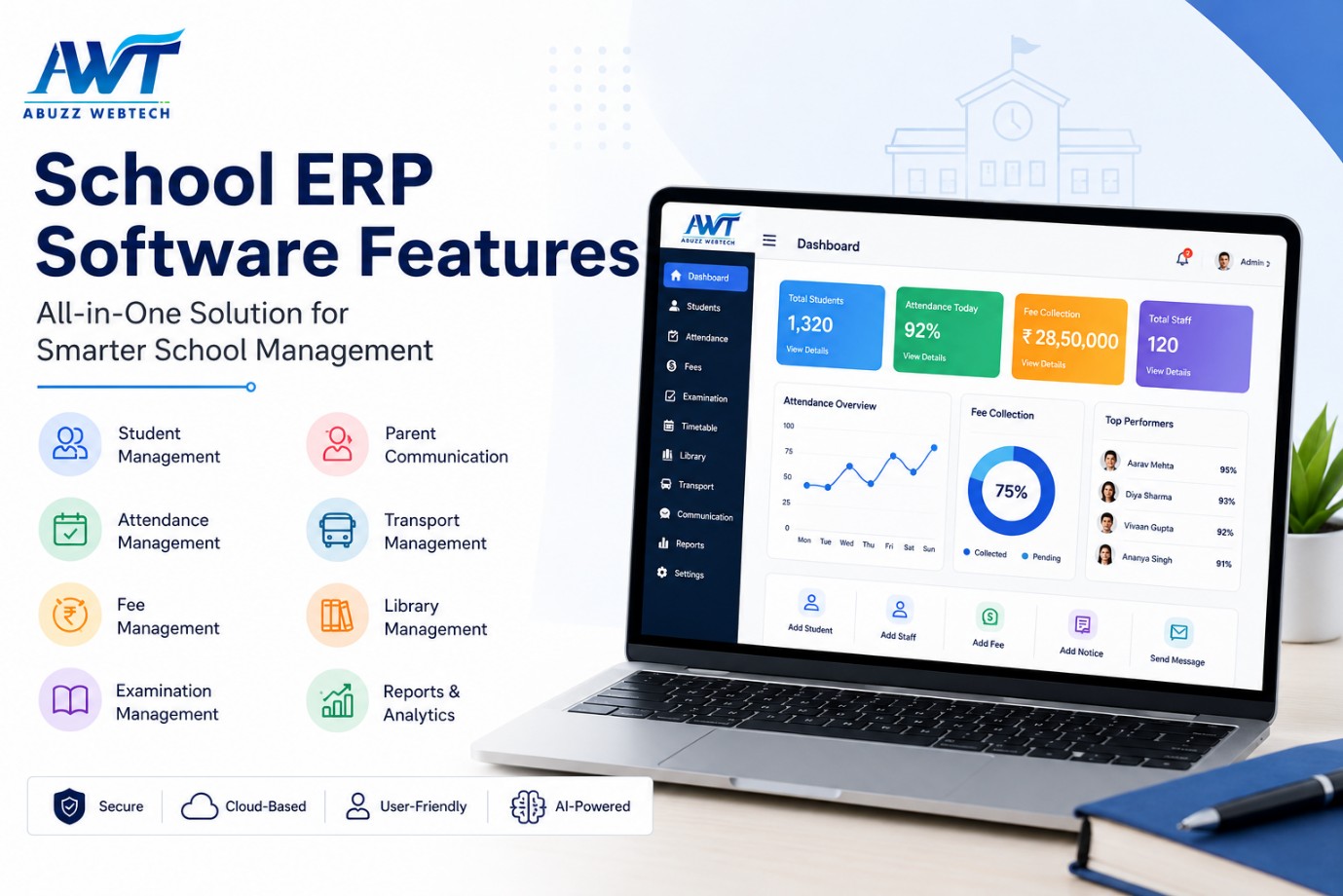
Key Features of a School Management System
| Feature | Description |
|---|---|
| Student Information System | Manage student records, admissions, and profiles |
| Attendance Management | Track student and staff attendance |
| Fee Management | Online fee payments, invoices, and reminders |
| Exam Management | Exam scheduling, grading, and report cards |
| Timetable Management | Create and manage class schedules |
| Library Management | Track books, issue records, and returns |
| Transport Management | Manage school vehicles and routes |
| Communication Portal | Send notices, alerts, and announcements |
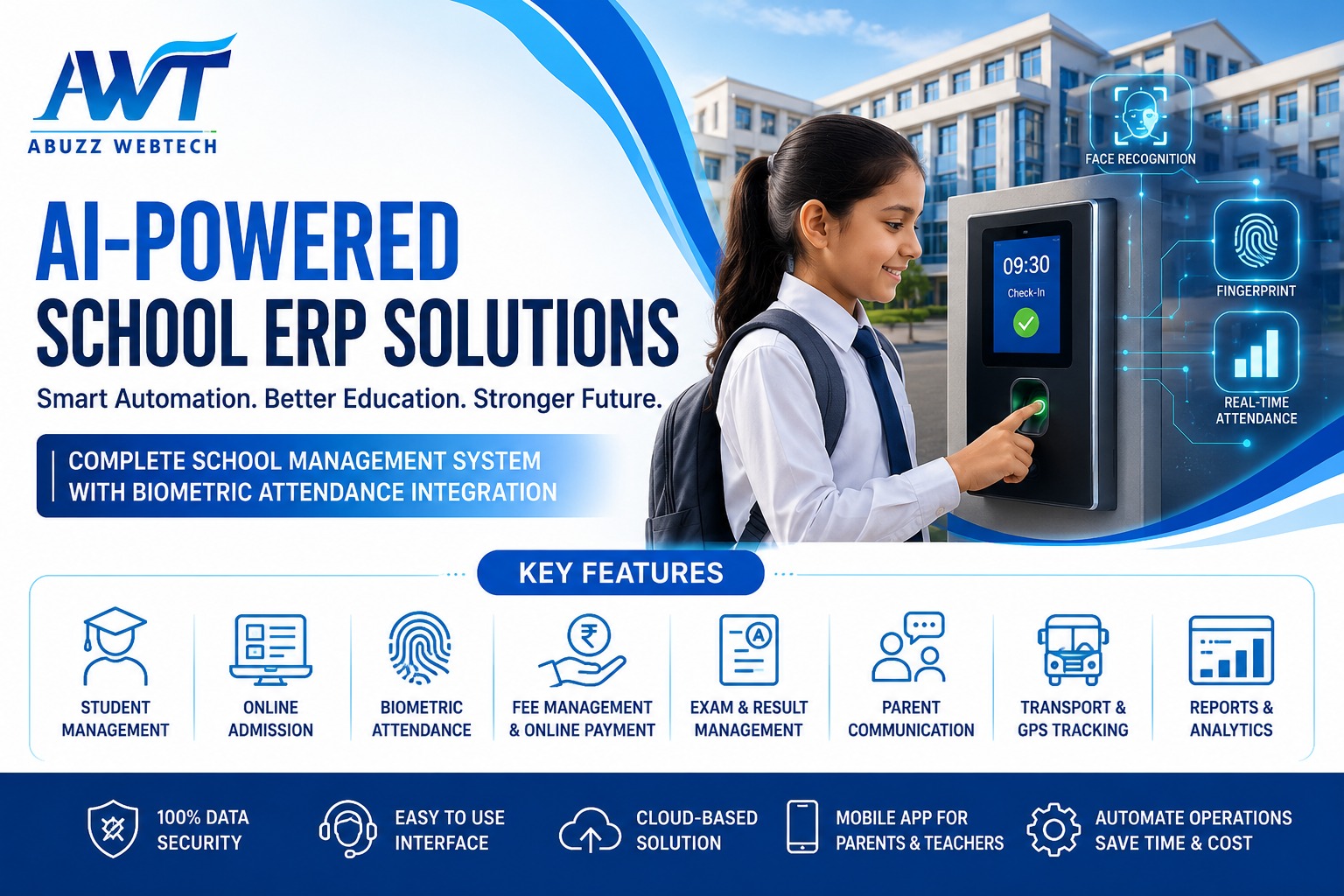
| Reports & Analytics | Generate academic and financial reports |
Benefits for Different Users
School Administrators
Simplified management of school operations.
Teachers
Easy attendance tracking, grading, and communication.
Students
Access to schedules, assignments, and results.
Parents
Real-time updates about student progress and activities.
Data Security in School Management Systems
Schools store sensitive data such as student records, financial transactions, and personal information.
- Secure Login Authentication: Ensures only authorized users can access the system.
- Role-based Access Control: Limits access based on user roles and permissions.
- Data Encryption & Protection: Protects sensitive data from breaches and threats.
- Regular Data Backups: Prevents data loss and ensures quick recovery.
- Protection from Unauthorized Access: Enhances system security against cyber threats.
Future Trends in School Management Systems
Technology continues to transform the education sector, and School Management Systems are evolving with new innovations.
- Cloud-based ERP for remote access
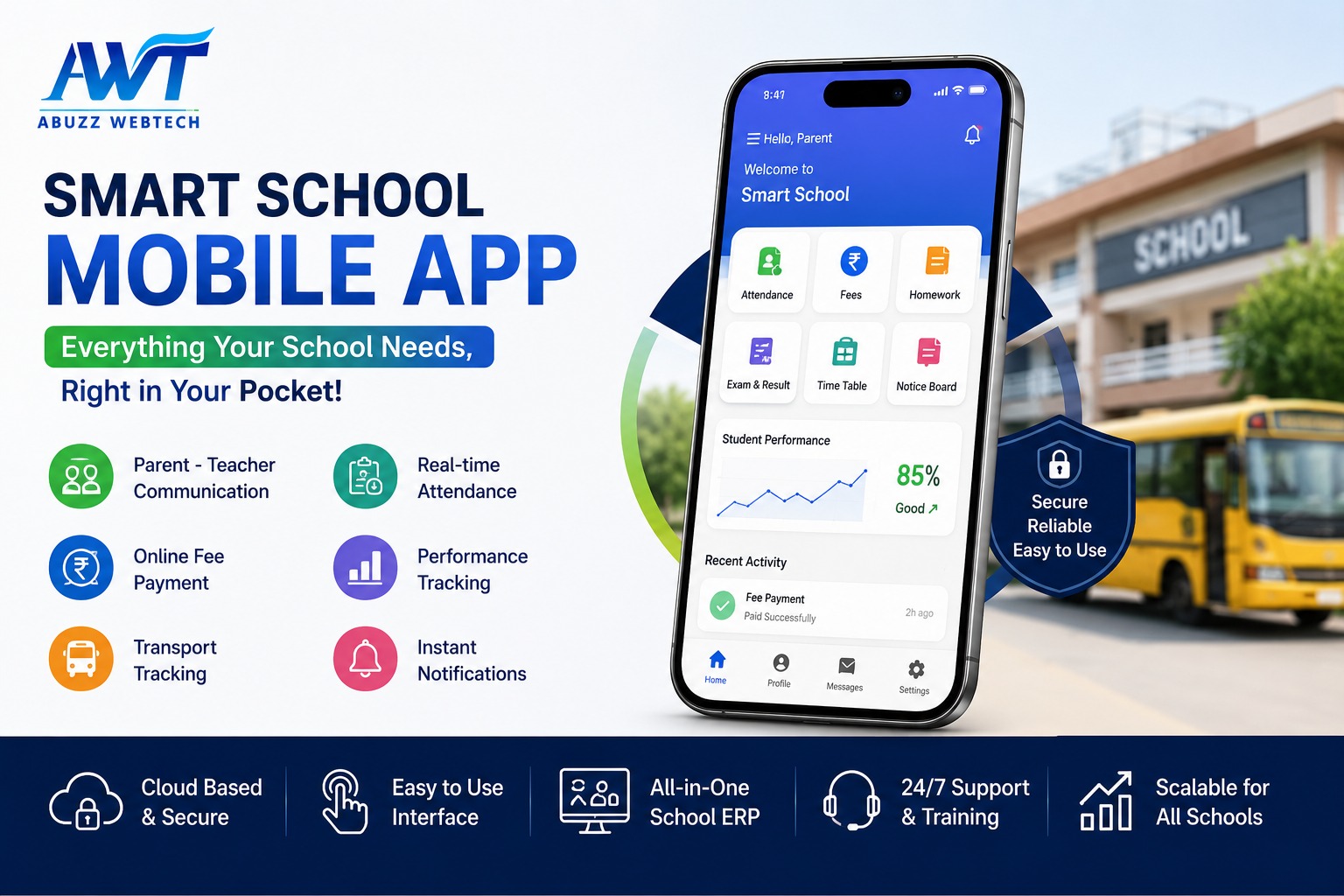
- Mobile applications for parents and teachers
- Artificial Intelligence for student performance analysis
- Automated notifications and communication tools
Major Advantages of School ERP Software
- Reduces paperwork and manual errors
- Improves communication between school and parents
- Provides real-time data and reports
- Saves administrative time and operational costs
- Enhances transparency in school management
Schools using School Management Systems can focus more on education rather than administrative workload.
Implementation of a School Management System
Implementing a School ERP Software requires proper planning to ensure smooth adoption by staff and administrators.
| Step | Description |
|---|---|
| Requirement Analysis | Identify the school’s operational needs |
| Selecting ERP Software | Choose the right School Management System |
| Data Migration | Transfer existing student and school records |
| Staff Training | Train teachers and staff to use the system |
| System Deployment | Launch the ERP system across the school |
| Continuous Support | Monitor performance and provide updates |
Case Study: School ERP Implementation
Common Challenges
| Problem | Impact |
|---|---|
| Manual attendance records | Time-consuming and error-prone |
| Fee collection through registers | Difficult to track payments |
| Scattered student data | Hard to access quickly |
| Limited parent communication | Delayed updates |
Improvements After ERP
| Area | Result |
|---|---|
| Attendance Management | Digital tracking reduced manual work |
| Fee Management | Automated tracking and payments |
| Student Data | Centralized and secure records |
| Parent Communication | Instant updates |
Frequently Asked Questions (FAQs)
1. What is a School Management System?
A School Management System is software that helps schools manage administrative and academic tasks digitally.
It centralizes student records, attendance, fees, exams, and communication with parents in one platform, making school operations more organized and efficient.
2. What are the main features of School ERP software?
Main features include attendance management, fee management, examination management, communication tools, timetable management, and report generation.
3. How does School Management Software help schools?
It reduces paperwork, automates administrative tasks, improves communication, and provides real-time access to data.
4. Is cloud-based School ERP software secure?
Yes, modern cloud-based ERP systems use encryption, secure authentication, and data backup systems to protect information.
5. How do schools choose the best School Management System?
Schools should consider features, scalability, ease of use, technical support, security, and integration capabilities before selecting ERP software.
Conclusion
A School Management System plays a vital role in modernizing educational institutions by simplifying administrative and academic processes.
From attendance tracking and fee management to communication and analytics, School ERP Software helps schools improve efficiency, transparency, and decision-making.
As technology continues to evolve, schools adopting digital ERP systems will be better prepared for future educational and operational challenges.